
UP Warriorz open their account with some brilliant cricket all round. Read our analyses below!
🧠 Lanning’s tactical nous finally showed up
Meg Lanning’s captaincy has come under the scanner. And with reason, right? Here’s one of the most successful captains to have ever graced cricket. Yet with this UP Warriorz side, it’s been three losses out of three, before tonight.
A mind-boggling stat that reinforces this scrutiny: as international captain, Lanning never lost three games in a row. Ever. Think about that for a moment.
Tonight, though, was a refreshing sight. Lanning showed signs of her tactical prowess once again.
It all started with the broadcasters having a chat with Phoebe Litchfield, asking her what playing with and under Lanning has been like, especially now that Litchfield is a WBBL captain herself. A telling insight emerged: Lanning had already asked Litchfield for advice multiple times through the tournament—a sign of a leader willing to listen and be open with their thinking.
And then tonight, that shone through in small phases of the game.
For starters, it was evident in how she used her bowlers and the matchups with certain players. She was happy to give Kranti Gaud four overs on the trot—not just to maximize Kranti’s ability to swing the ball and maintain rhythm, but also because she wanted to delay introducing bowlers like Sophie Ecclestone for more suitable matchups against Nat Sciver-Brunt and Harmanpreet Kaur. This was all the more important because Kranti hadn’t bowled her full quota before this. But because she was going well today, Lanning was willing to give her the full four upfront.
But the most telling bit of tactical brilliance came with a small field adjustment against the dangerous Harmanpreet Kaur, who at that point was also the Orange Cap holder. It was imperative that UP got her wicket soon to curb Mumbai’s momentum.
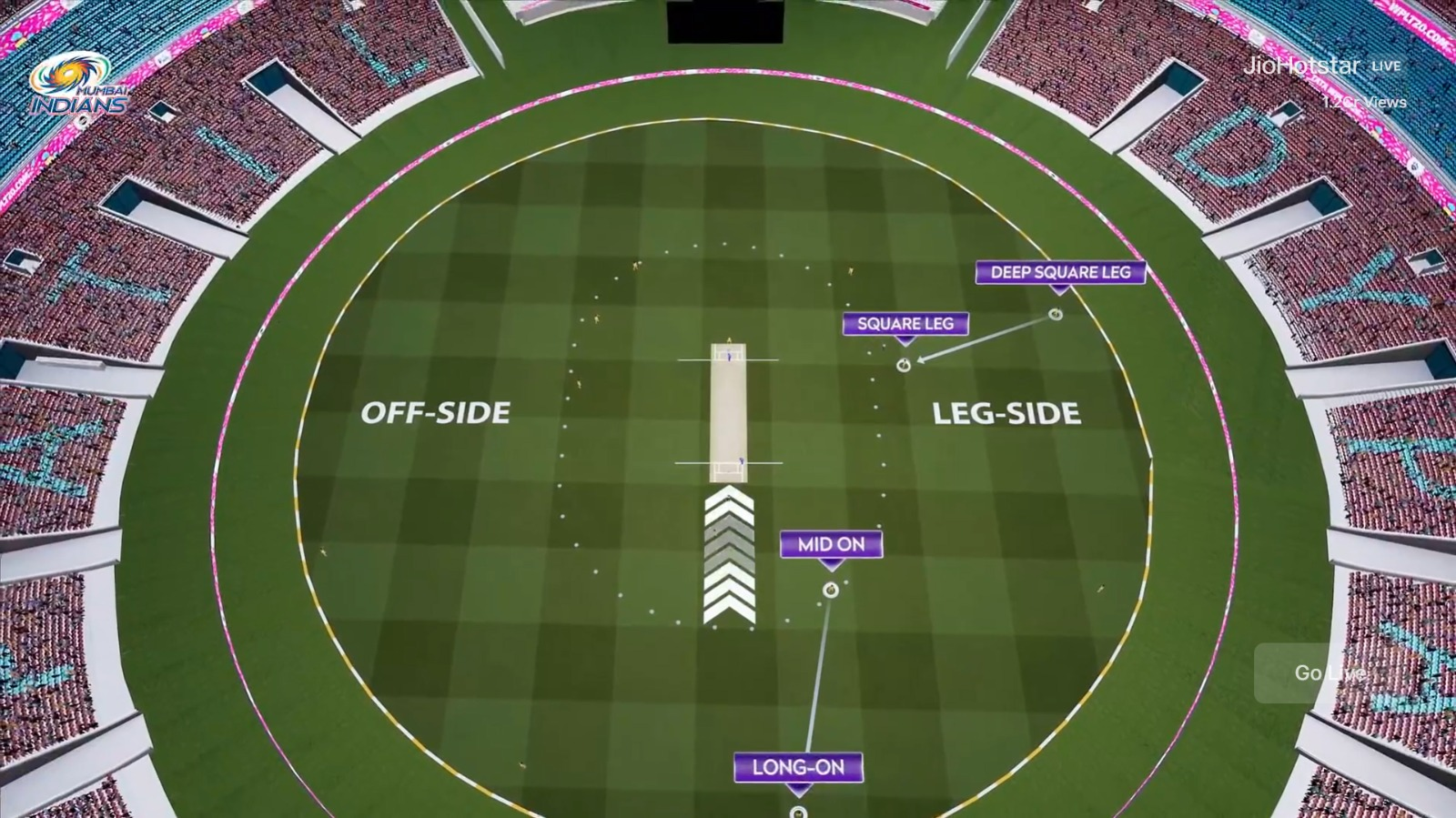
When Harmanpreet took on Asha Sobhana, hitting her for a six straight down the ground, Lanning made a change. She brought deep square leg inside the circle and sent mid-on down to long-on. With Sobhana bowling from round the wicket, the idea was simple: either let Harmanpreet get off strike by hitting to long-on, or force her to try and clear square leg inside the ring to find a boundary.
It made sense theoretically. Harmanpreet is a brilliant sweeper and reverse-sweeper, and an even better slog-sweeper, scoring roughly 31% of her runs with those shots. If you look at her sector heat map, her favorite area is around mid-wicket—thanks to those monstrous sweeps and her tendency to step down the track.
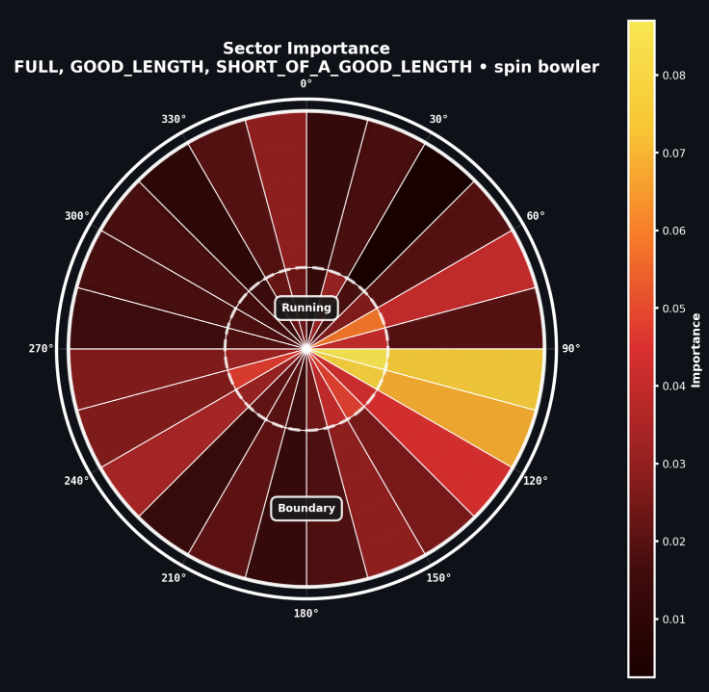
The plan was set. Harmanpreet obliged.
A slow, flighted ball from Sobhana, pitching full outside leg stump, turning into her. Harmanpreet had to generate all the power herself. She connected decently but couldn’t get the required elevation. The plan worked. Chloe Tryon completed a brilliant catch to send the Mumbai captain packing.
A brilliant passage of play. A small adjustment, a clear plan, and perfect execution.
This is the Meg Lanning we know. The one who reads the game, makes subtle tweaks, and gets wickets at crucial moments. Tonight, it finally showed up when UP Warriorz needed it most.
😪 How Harleen Put “Off” Mumbai’s bowlers
There have been 15 retired-outs in T20 cricket to date. Three have come at the start of this year—two in the WPL, and one just the previous night when Harleen Deol was shockingly recalled by Abhishek Nayar despite looking set for a big score.
It visibly shattered her. The disappointment was written all over her face as she walked off.
But cricket is a funny game. In about 24 hours, Harleen was up and about once again, walking in at number four for UP Warriorz, chasing 162 with the game tilted in Mumbai’s favor at 45 for 2 in 8.3 overs.
Opinions have been flying around—not just about the decision to retire her out, but also her general strike rate and hitting ability in the T20 format. It’s no secret that Harleen’s strike rotation and boundary-hitting have come under scrutiny multiple times in the past.
Tonight, though, Harleen hit sublime form.
She notched up 64* off 39, an innings laced with 12 fours and an absolute masterclass in batting on the off side and picking gaps. With a balls-per-boundary ratio of just 3.25, Harleen combined her boundaries with delicate dabs and nudges, especially to the leg side, keeping the scoreboard ticking even when she wasn’t finding the fence.
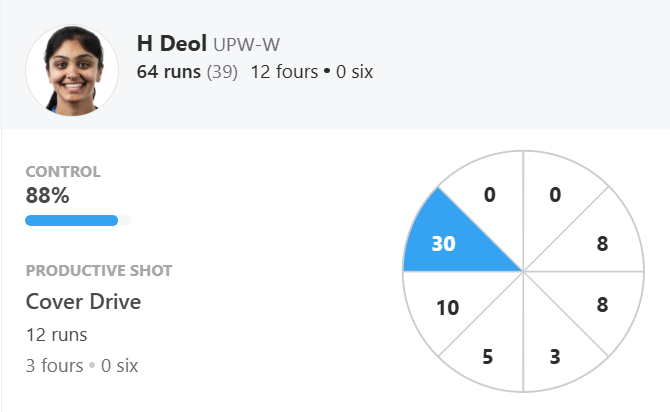
Her first seven boundaries all came through the off side as she pierced gaps through a packed field and took on the likes of Amelia Kerr and Nat Sciver-Brunt. What was especially productive was her scoring behind square on the off side, where she racked up 30 runs.
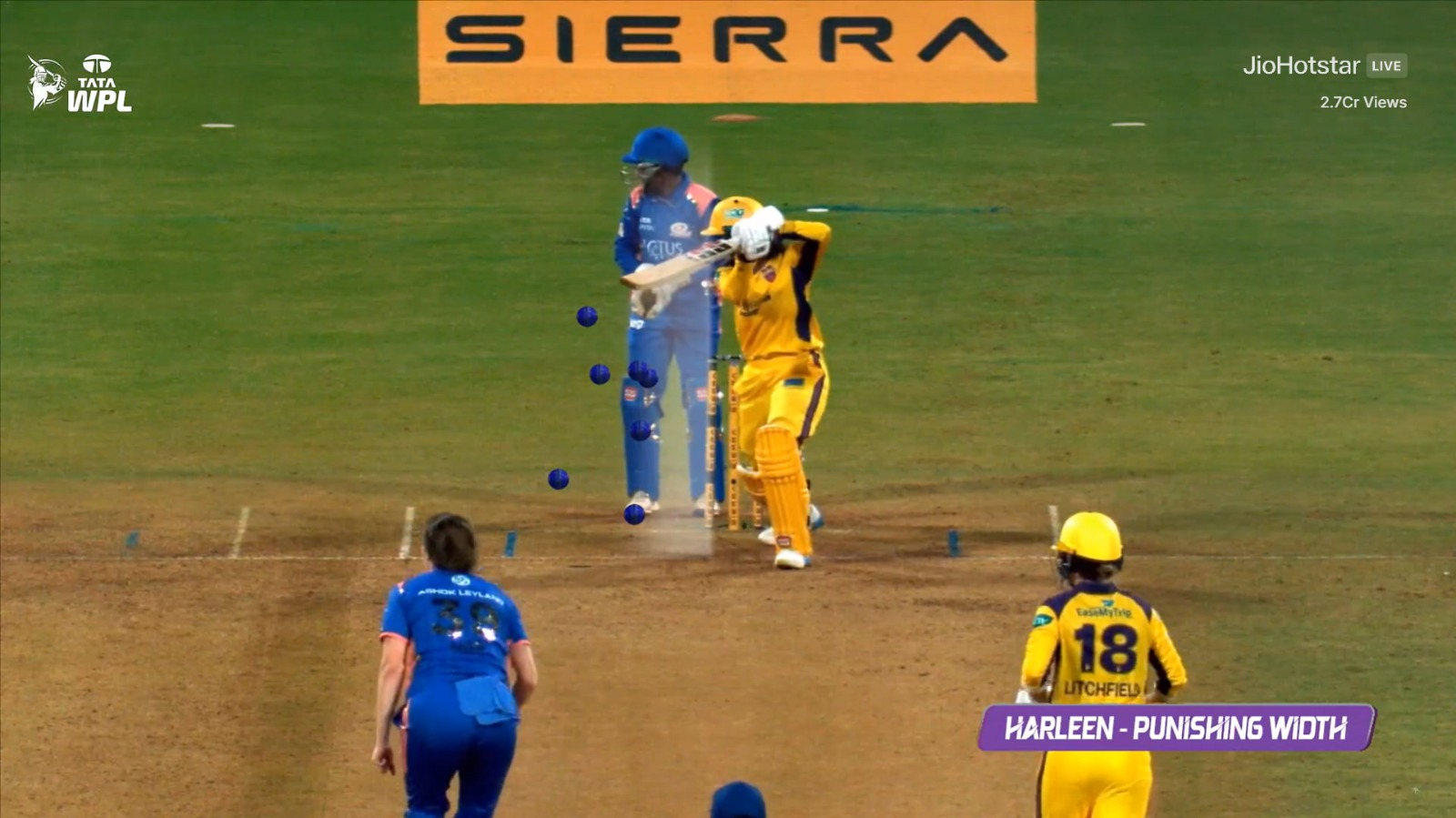
Historically, her most productive region has been the cover region—as her career heat map shows. But tonight, it was heartening to see her open up the off side even further, finding boundaries more consistently and with greater intent.
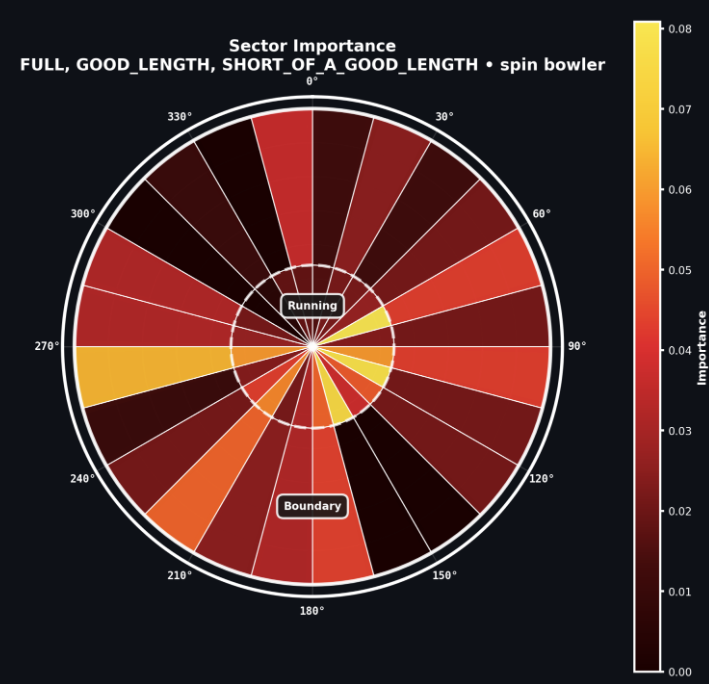
Above all, the knock was a testament to her mental fortitude and temperament. To be retired out one night, then walk in the next day with the game on the line and play with such freedom and authority—that takes serious steel.
Harleen didn’t just answer her critics tonight. She reminded everyone that she belongs.
Data from Women’s T20 Batting App using Himanish Ganjoo’s T20 cricket BBB database up until October 2025, Arnav Jain’s fielding toolkit, Cricmetric, Cricket By JB’s WPL analyses & the Broadcast.
Want to learn more about WPL stars, their numbers and what they’re good at? Try out our WPL Quiz game 🔽
Inspired by writers on Substack and the Best Cricket Stories.