
Tonight was a game that, in great detail, highlighted how important spin is going to be toward the business end of the WPL. We’ve already seen that Vadodara has offered slower, lower wickets than the belters in Navi Mumbai. The consequence is reflected not only in lower scores but also in how much more the spinners have dominated the second leg of the WPL.
Read our analysis below.
🛞 How the Giants spun the Capitals away
For starters, batting in Navi Mumbai saw players average 28 and strike at 141.2. In Vadodara, across fewer innings, we’ve seen much lower numbers—an average of 20.3 and a strike rate of 121.1. Acceleration hasn’t been straightforward, nor have innings been melodic crescendos.
It’s been a struggle for the average batter. Even for the more experienced campaigners, batting has required great application, multi-dimensional skillsets, and good temperament to score runs of note.
In eight overs of spin tonight, Delhi Capitals picked up 5 wickets while giving away 65 runs—going at just over 8 runs per over. Gujarat Giants, on the other hand, were happy to bowl more spin, learning from what the Capitals did as well as how their pacers were dispatched. The Giants deployed spin for a whopping 13 overs, picking up 4 wickets but giving away just 95 runs at 7.3 runs per over.
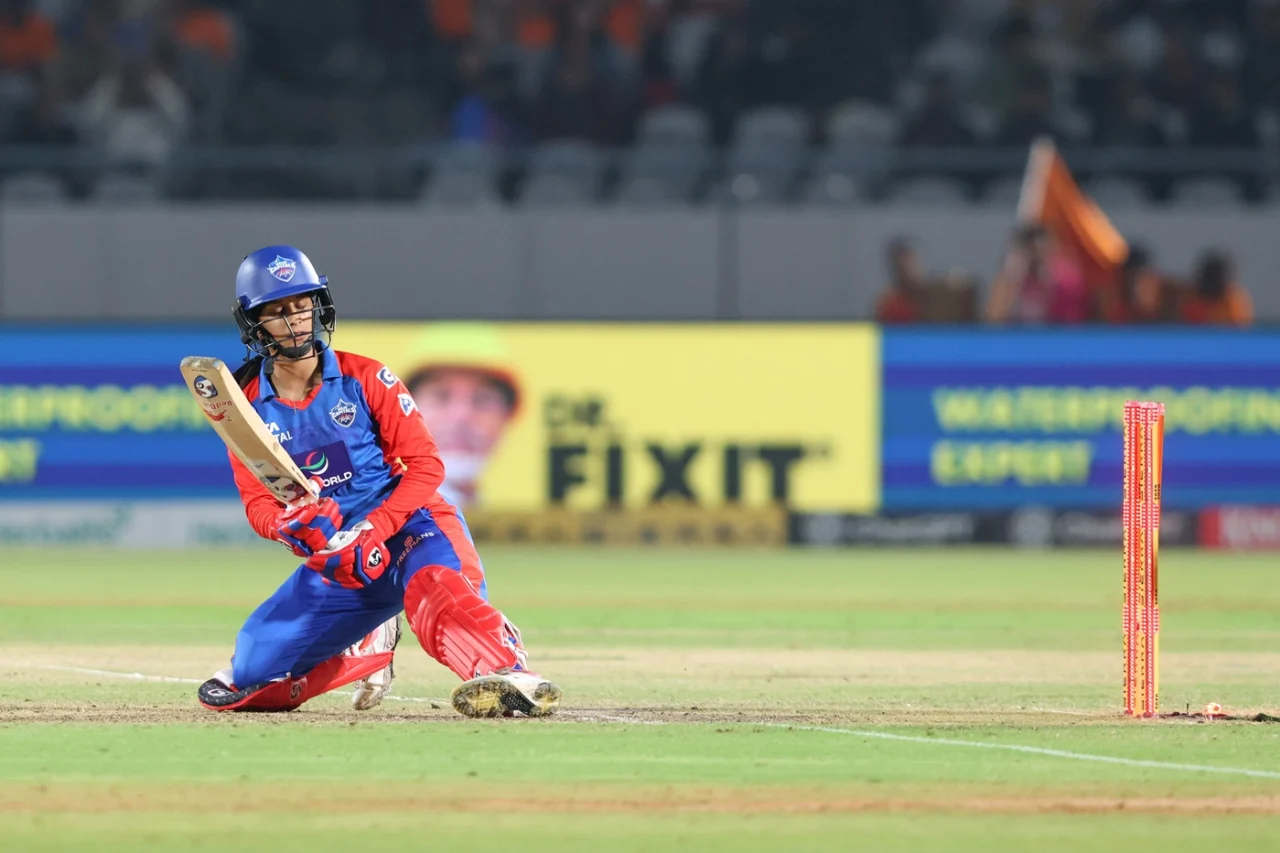
So although they picked up one wicket fewer, the coupling of those wickets with a better economy rate, and for a longer period, meant they grasped the game by the scruff of its neck.
Where Jemimah Rodrigues was erratic in doubling down on using her spinners consistently through the middle phase, bringing back Marizanne Kapp and Nandani Sharma for overs in the middle, it was Ashleigh Gardner who realised the importance of spin on this wicket and employed Rajeshwari Gayakwad’s left-arm spin from the third over itself. Of course, it also helped that she got her captain a wicket—but the impact is evident enough now.
Navi Mumbai, across 194.1 overs of spin, saw 49 wickets taken at 9.37 runs per over. Vadodara has already seen 35 wickets in just 96.4 overs at 7.58 runs per over. But the hidden trend even within this is the sudden increase in wickets for left-arm spinners—something we’re more used to seeing in world cricket over the last couple of seasons.
In Navi Mumbai, left-arm spinners accounted for just 12 of 49 wickets—24.4% of all spinner wickets. Vadodara seems to be the place to be a left-arm spinner, with 20 of the 35 wickets so far, a whopping 57.1%, falling to the southpaws.
So while we can all talk about Delhi’s choke or brilliance from Sophie Devine—both of which are true—you cannot discount the fact that the real battle was lost long before. Gujarat smartly leveraged the conditions. They utilised their depth and spun themselves to victory.
Data from Women’s T20 Batting App using Himanish Ganjoo’s T20 cricket BBB database up until October 2025, Arnav Jain’s fielding toolkit, Cricmetric, Cricket By JB’s WPL analyses & the Broadcast.
Want to learn more about WPL stars, their numbers and what they’re good at? Try out our WPL Quiz game 🔽
Inspired by writers on Substack and the Best Cricket Stories.