
By Raunak
Three boys at the same nets: a study in destiny
There are stories that begin with spectacle, and then there are those that begin quietly with
dust. Bats pressed into young palms, and the ordinary echo of leather meeting the willow. In
the late 1980s, at Sharadashram and on the uneven practice pitches of Mumbai, three such
stories began side by side. Not on a grand stage. Not under floodlights. Just boys in whites
that were never quite white, eyes sharp with hunger and futures not yet named.
Sachin Tendulkar. Vinod Kambli. Amol Muzumdar.
Three prodigies cut from the same soil, raised on the same discipline, shaped by the same
city. And yet, as time unspooled, their paths did not run parallel for long. Instead, they
separated into three distinct arcs: godhood, downfall, and quiet permanence. A triad that
reveals not only the anatomy of talent, but the temperaments that either hold it together or
tear it apart.
This is not simply a story of cricket. It is a study in temperament. In survival. In many ways, brilliance chooses or refuses to stay.
The boy who became inevitable
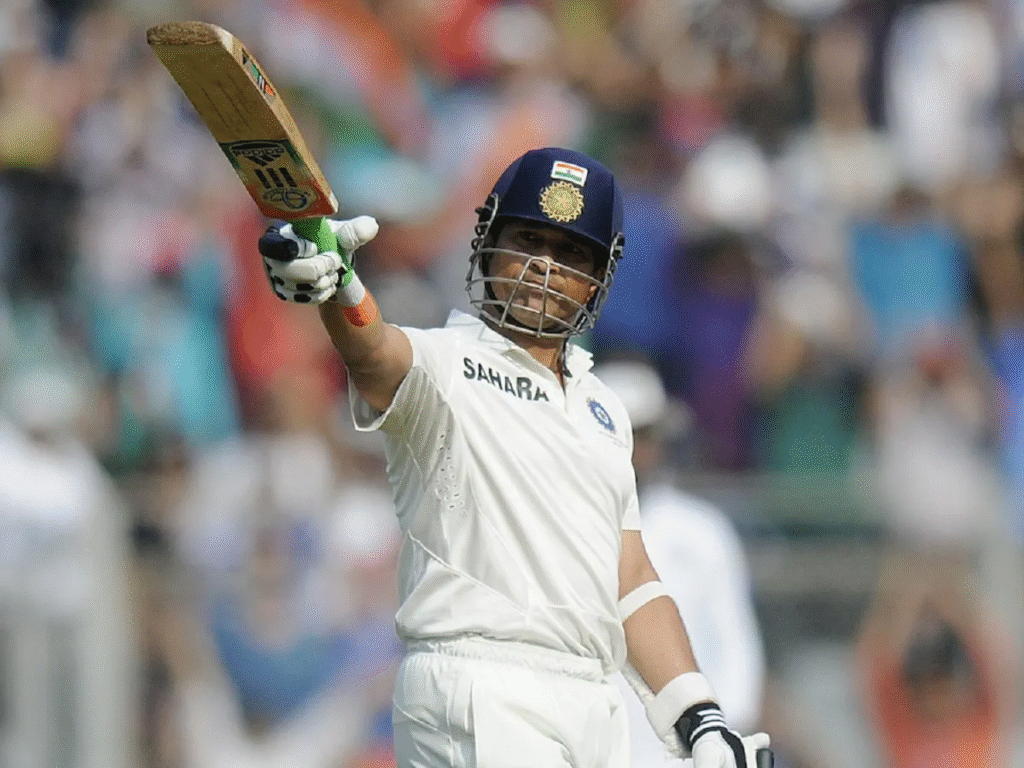
Sachin Tendulkar did not arrive loudly. He arrived surely. Even as a child there was an
unsettling sense of certainty around him, as though the game had already chosen him and
he had merely agreed to accept the terms. Coaches saw it. Teammates sensed it.
The public, though it did not yet know his name, would one day swear they had always known.
What separated Tendulkar from other prodigies was not just skill. It was his almost inhuman
surrender to discipline. He emptied himself of excess and gave everything to the craft. No
rebellions. No flare-ups. Only repetition, ritual, and a faith in process so complete that it
bordered on religious devotion.
He did not play to be admired. He played because it was the purest form of obedience he
knew.
As years passed, India grew around him, and he grew inside it. Run by run, season by
season, until the country could no longer distinguish between the man and the moment. A
straight drive became comfort. A century became a festival. A dismissal felt like a national
wound.
People began to call him God, not because he demanded worship, but because their belief
required a vessel. In him, talent, restraint and timing formed an alignment so perfect that it
felt supernatural.
History, in the presence of such balance, does not argue. It bows.
The boy who burned
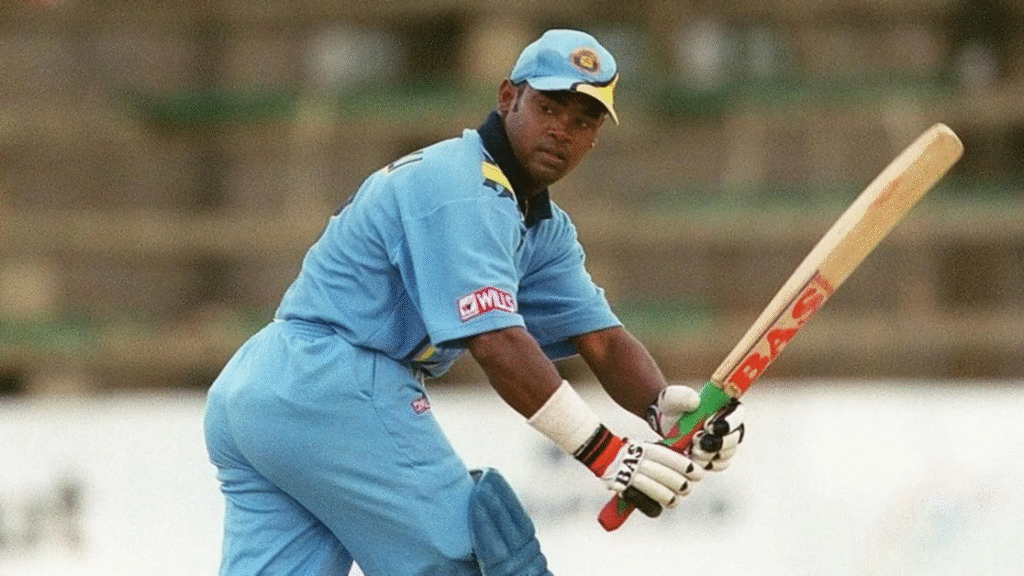
Vinod Kambli, in contrast, arrived like a storm. Where Sachin was controlled water, Kambli
was lightning. Brighter. Louder. Impossible to look away from.
He shared a world-record school partnership with Tendulkar. He walked into Test cricket and
produced innings that bordered on the unreal. His bat spoke in poetry. His presence
unsettled bowlers. His talent was not in question, it announced itself again and again.
But brilliance, left unattended, has a way of consuming its host.
Where Tendulkar learned to disappear into discipline, Kambli remained painfully present in
his own life. Fame found him early and did not let go. The world opened too quickly, too
loudly, and what once felt like flight slowly began to feel like fall.
To reduce his story to moral failure is to misunderstand it. His was not a simple decline in
form but it was an unraveling of balance. A human heart battling an inhuman expectation. A
boy who had never been taught how to survive the version of himself the world adored.
If Tendulkar became a god through surrender, then Kambli became a warning through
resistance.
Not because he lacked greatness but because greatness alone is not a shelter.
He is the echo that lingers after applause dies. A reminder that genius without grounding is
still just a flame, beautiful and brief.
The boy who endured
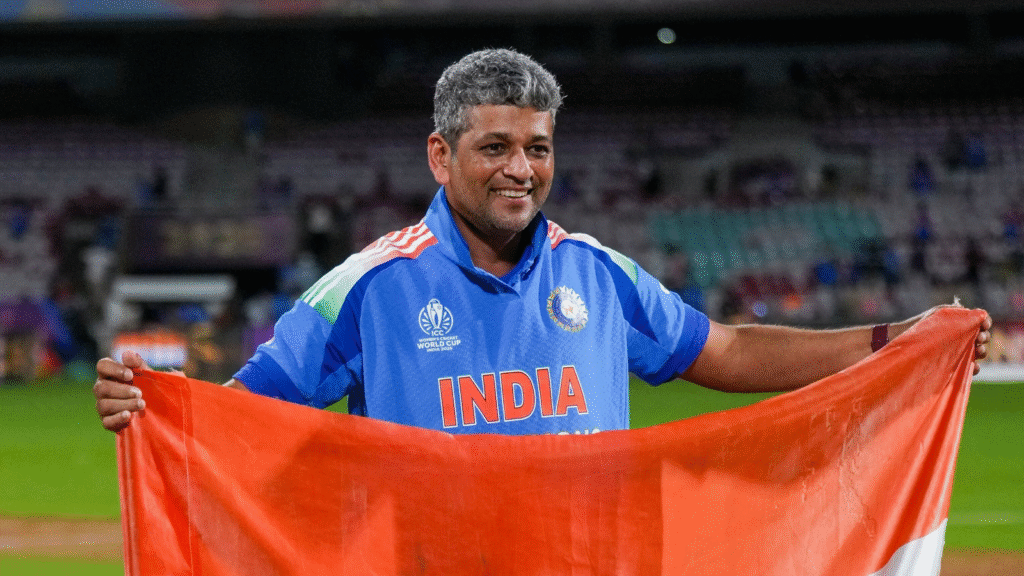
And then there is Amol Muzumdar, the name spoken less in headlines and more in
reverence. The one who did not receive the grand coronation, yet never turned his face
away from the game that both gave and denied him recognition.
In domestic cricket, he built monuments inning by inning. A triple century. Seasons of
consistency. Records etched quietly into scorebooks that never made front pages.
He was once labelled “the next Tendulkar.” He did not become that. Instead, he became
something else entirely: proof that purpose does not depend on spotlight.
When his international opportunity never truly arrived, he did not unravel. He stayed. He
adapted. He remained faithful to the game, even when the game seemed indifferent in
return. And when his bat finally rested, his hands turned to teaching. Reshaping other
journeys, guiding the next generation through corridors he had walked alone.
In him exists a rare kind of victory: the kind that does not require an audience.
Three reflections of one system
Together, these three men form a quiet, devastating study of possibility:
Tendulkar is what happens when talent meets harmony.
Kambli is what happens when talent meets chaos.
Muzumdar is what happens when talent meets endurance.
They emerged from the same city, the same coaching culture, the same belief in the same
dream. But their lives remind us that destiny is not only forged by ability. It is shaped by
mind, by support, by timing, by the fragile architecture within.
Perhaps that is the truth their stories leave behind for anyone watching from the stands, from
the sidelines, from the uncertain edge of ambition:
That greatness is not a single road.
And that being seen is not the same as being sustained.
And still, somewhere on a quiet practice pitch, another child takes guard unaware that fate
has already chosen a path, and is waiting only to see how he will walk it.
Not gold, not crown
only hands raised together
forming a court made of pulse and prayer,
where timber becomes prophecy
and a blade of willow outshines steel.
Here, the throne is a crease,
etched in chalk and memory,
and the people are lilies and laurel,
ringed around the emerald floor,
breathing life into their chosen sons.
One walked in wrapped with white jasmine,
its fragrance slow, measured, holy.
Petals never hurried,
each one placed like a vow
upon the tongue of spring.
He bowed only to the seam of the ball,
to the long scripture of patience.
The court did not call him King
they called him weather,
Rain for droughted hearts.
Sun for broken afternoons.
And so, godhood found him gently,
as garlands of lotus opened beneath his feet
unstained, unwavering.
Another entered crowned by scarlet hibiscus,
wild with colour, defiant in bloom,
a sudden blaze in the garden of order.
His strokes were feral poetry;
the air split open to make way for him.
But the same petals that worshipped him
also burned his palms.
Oleander whispered from beyond the boundary
beautiful, venomous, irresistible.
The court watched in silence
as his wreath unravelled into thorns,
and brilliance bled into earth.
Not a fallen star,
only a comet that loved the sun too fiercely
to orbit.
The third stood in shade beneath chrysanthemums,
golden yet unseen,
counting seasons in runs
no trumpets announced.
His was the garden’s quiet labour,
the kind that keeps the roots breathing.
When the court’s gaze wandered elsewhere,
he remained
a camellia refusing winter,
a lesson written in persistence.
When his bat softened,
his hands turned to shaping springs
guiding new buds
toward a sky that once denied him rain.
And the King’s Court watched.
Always watching.
They are not mere witnesses
they are pollen in the wind,
carrying names into legend.
They are the unseen coronation,
the chorus that lifts a boy into myth,
or breaks a man into echo.
It is their palms that anoint,
their silence that condemns,
their memory that immortalises.
Every cheer is a rose.
Every doubt, a thorn.
Every tear shed at the fall of a wicket
a forget-me-not pressed
between the pages of time.
Three prodigies.
Three bouquets laid
before the same invisible throne.
Jasmine for faith.
Hibiscus for fire.
Chrysanthemum for endurance.
And above them all,
a garden shaped like a crowd
where kings are not born,
only grown
in the trembling hands
of love.
Three boys. One beginning. Three very different ways of remaining in the world.
References:
Article title: Amol Muzumdar: The mastermind behind India’s historic Women’s World Cup
triumph
Website: Firstpost (FirstCricket)
Date of publication: November 4, 2025
URL: https://www.firstpost.com/firstcricket/amol-muzumdar-india-womens-world-cup-winning-coach-journey-13947555.html
Article title: Kambli made poor choices… but Vinod still has some goodwill left
Website: HarshaBhogle.com
Date of publication: no date
URL: https://www.harshabhogle.com/archives/articles/kambli-made-poor-choices-but-vinod-still-has-some-goodwill-left/