
After a disappointing showing in the WPL opener, the Mumbai Indians rectified their mistakes and opened their account with a convincing victory over the Delhi Capitals.
Why couldn’t Delhi’s formidable top 5 make the chase? Have a read!
📝 Ismail because you’ve done the Brunt work
Forgive my incredible pun, onto the analysis 🔽
Delhi Capitals came into this match with a formidable top five: Lizelle Lee, Shafali Verma, Laura Wolvaardt, Jemimah Rodrigues & Marizanne Kapp. Experience, firepower, and consistency across the board.
By the end of the powerplay, they were 35 for 4, completely derailed and in no position to chase. What went wrong?
A combination of brilliant homework, relentless pressure, and scoreboard strangulation.
The ultra-experienced duo of Shabnim Ismail and Nat Sciver-Brunt knew exactly where to attack. Lizelle Lee and Shafali Verma—DC’s most explosive batters—don’t carry the best reputation against the short ball. It was spoken about on commentary, visible in their struggle to score, and ruthlessly exploited by Mumbai’s veteran bowlers.
Seventy-seven per cent of all deliveries bowled to Shafali Verma were short in length. For Lizelle Lee, that number stood at 50%. They couldn’t breathe. Between them, they accumulated 13 dot balls out of the 23 deliveries they faced.
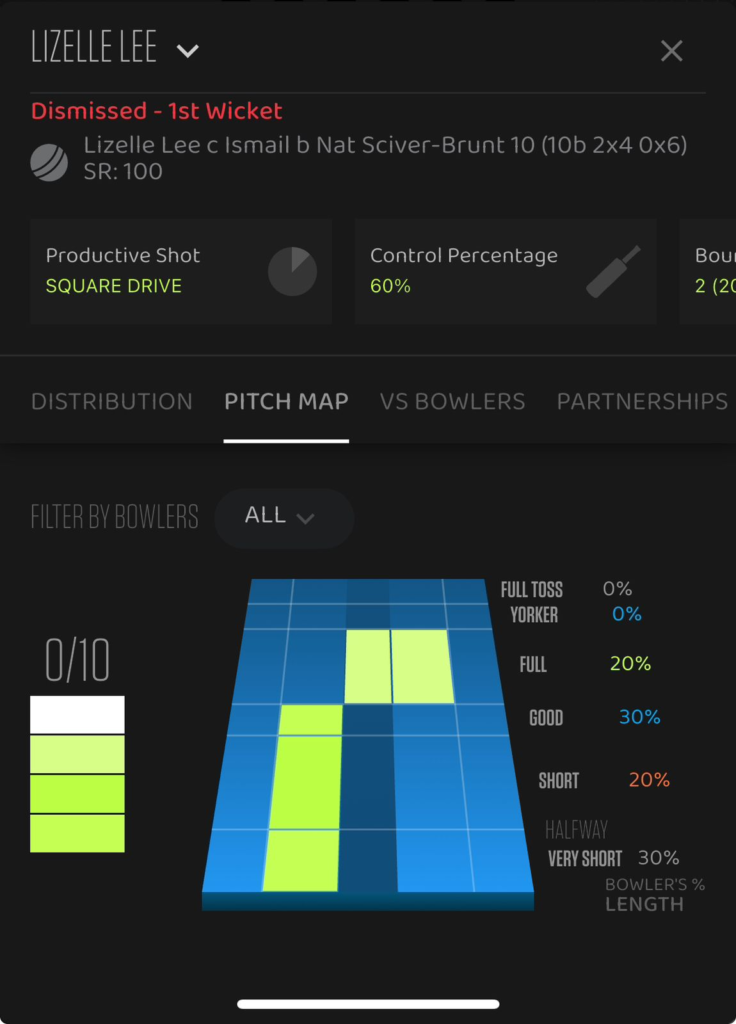
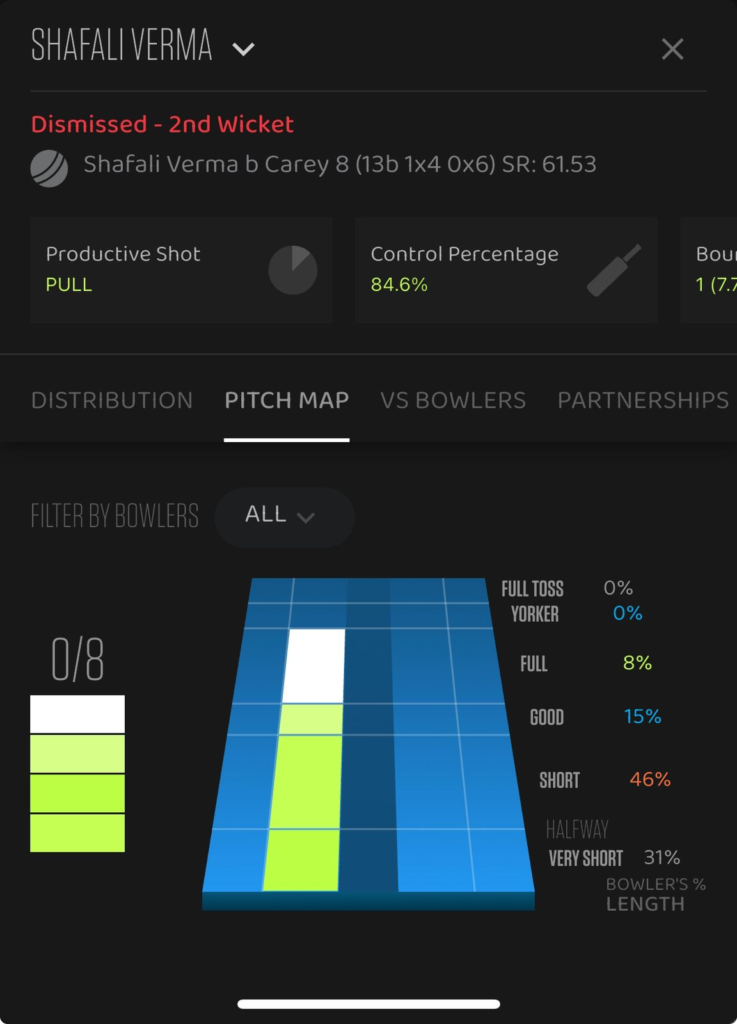
For two batters with ball-per-boundary ratios under 5—among the best boundary hitters in the competition—they managed just three boundaries off their 23 combined balls. Their BPB ratio tonight? 7.6. Nowhere near good enough.
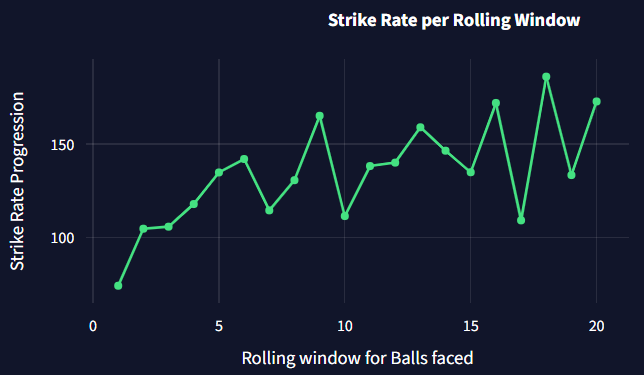
Shafali’s innings progression record shows how much she loves to take charge early. Since 2023 in T20s, there’s no point after her first ball where her strike rate dips below 100. She thrives on momentum. The moment Mumbai choked her with dots, it was only a matter of time before she cracked.
Lizelle Lee departed to a loose stroke, but the wickets that followed—Verma, then Wolvaardt—were consequences of the pressure Ismail and Brunt had built. Nicola Carey reaped the rewards of the seeds they’d sown, picking up wickets as DC’s batters tried to break free but had no rhythm to work with.
Brilliance from G Kamalini, who caught an edge off Jemimah Rodrigues, meant the game was all but over inside the powerplay. When Marizanne Kapp fell in the seventh over, it was the nail in the coffin, despite Chinelle Henry and Niki Prasad still to bat.
The Mumbai Indians didn’t just bowl well. They executed a plan with surgical precision, identified weaknesses, and strangled the Delhi Capitals before they could ever settle. By the time DC realised what was happening, the game was already gone.
Data from Women’s T20 Batting App using Himanish Ganjoo’s T20 cricket BBB database up until October 2025 & Cricket By JB’s WPL analyses.
Want to learn more about WPL stars, their numbers and what they’re good at? Try out our WPL Quiz game 🔽
Inspired by writers on Substack and the Best Cricket Stories.
Kamilini’s catch was INSANEEEEEEE❤️🔥🔥🔥🔥🔥