
The Delhi Capitals FINALLY open their account in their 3rd game of the tournament, chasing down 155 against the UP Warriorz. This game saw a rather bizarre decision. Read our analyses below.
😪 Litchfield should be opening the batting
UP Warriorz have now recorded opening stands of 3, 21, and 0. Not once have they made it past even the fifth over. And invariably, it’s been Meg Lanning who’s had to pick up the pieces and carry the batting forward.
The powerplay started brilliantly for the Delhi Capitals. Veteran Marizanne Kapp delivered a wicket maiden, picking off Kiran Navgire on the third ball of the innings, ruining yet another opening stand for UP Warriorz.
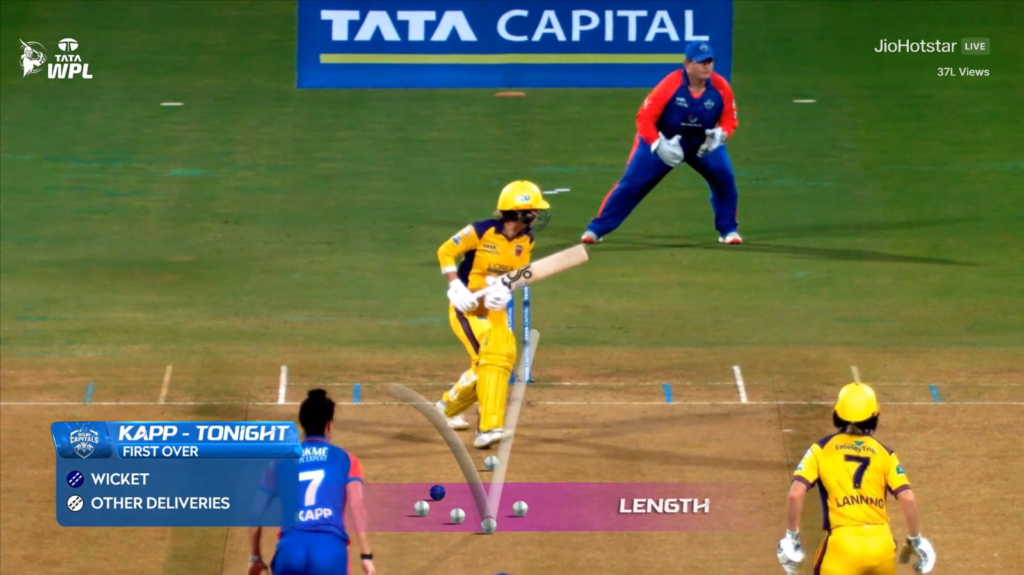
While Lanning took charge from the other end, dispatching Minu Mani for 16 in an over, the real threat was always Kapp. How well UP’s powerplay would go came down to how they handled her remaining two overs.
And this is where Phoebe Litchfield came into the spotlight.
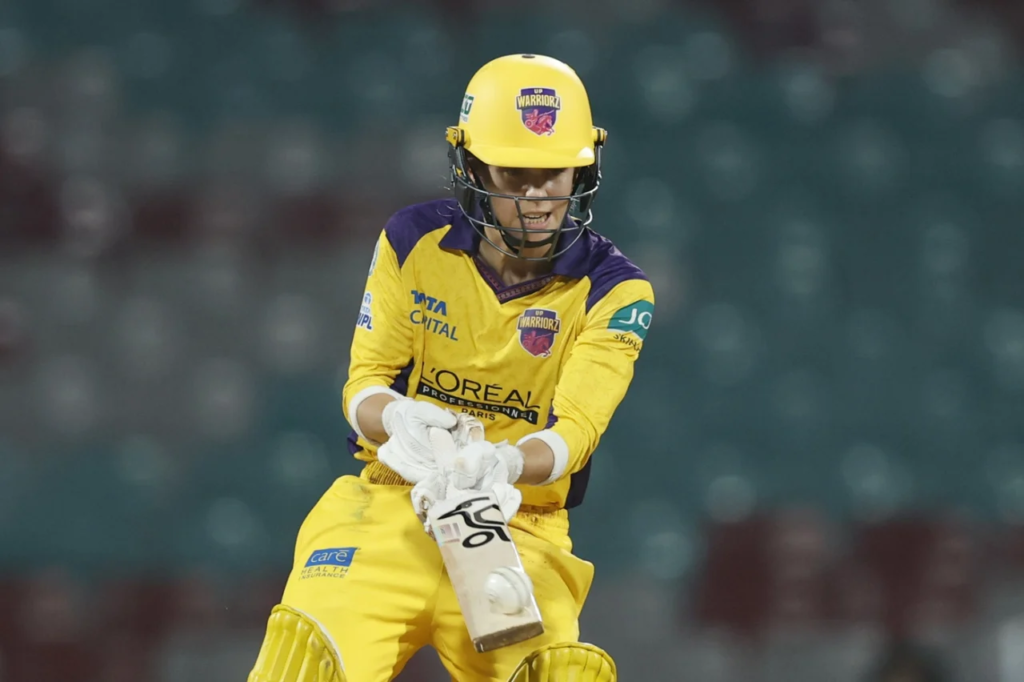
A fascinating passage of play commenced. Kapp bowled brilliant lines and lengths, swinging a couple into Litchfield to start. Nothing much Litchfield could do—she played three dots off her first three deliveries.
But when the Kapp-Litchfield battle resumed, it was clear Phoebe wasn’t just going to sit around and wait for a loose ball, not against Kapp. She was smart in how she approached Kapp’s second over:
Ball 1: Litchfield uses her feet to throw Kapp’s length off.
Ball 2: Kapp overcorrects, pitches it fuller—a half-volley that Litchfield gleefully dispatches through mid-off for four.
Ball 3: A good ball. Litchfield defends.
Ball 4: Litchfield steps outside the leg stump to create room. Kapp follows her, cramping her, but Litchfield still gets two courtesy of some lazy fielding from Chinelle Henry.
Ball 5: Back of a length, pitched outside off. Litchfield swivels across and laps it over the keeper for four.
Ball 6: Litchfield walks down the track again and punches it for one.
And just like that, after Kapp’s first over was a wicket maiden, Litchfield took her for 11 in the second—and more importantly, threw her line and length off.
The next over, Litchfield was slightly more reserved, knowing she didn’t need to go gung-ho, especially with Lanning finding runs at the other end. Kapp bowled a no-ball but didn’t go for a boundary. Later in the over, Litchfield stepped down the wicket again and dispatched Kapp for another four.
Kapp ended her third over with figures of 1 for 20. But the finer detail? She gave away 20 in her last two overs, courtesy of some brilliant batting from Litchfield. UP ended with a powerplay of 47 for 1.
It was almost a mirror image of their first game, where Litchfield came in during the first over after Navgire was dismissed for 1, and UP went on to score 46 for 1 in the powerplay.
When you know Litchfield can handle the new ball, when she’s literally opened in the ODI World Cup a couple of months ago and has opened a few times in T20s, and you know Navgire isn’t cutting it—why not open with Lanning and Litchfield?
The answer should be obvious. The evidence is right there. Yet UP Warriorz keep trotting out the same failing combination, hoping for a different result.
☝️ Retired out – please don’t make it a trend
At 141 for 3 approaching the end of the 17th over, Harleen Deol was out there, looking in good touch, set at 47* off 36 deliveries. In her head, this might have been exactly the kind of knock she needed.
Came in at a more natural batting position and period of play too, entering the game in the middle, facing spin. Especially after UP’s failed experiment with Deol opening the batting, her getting to this score would have done her a world of good. Heck, she was probably setting herself up for the last 3 overs, hoping to get around 30 off them.
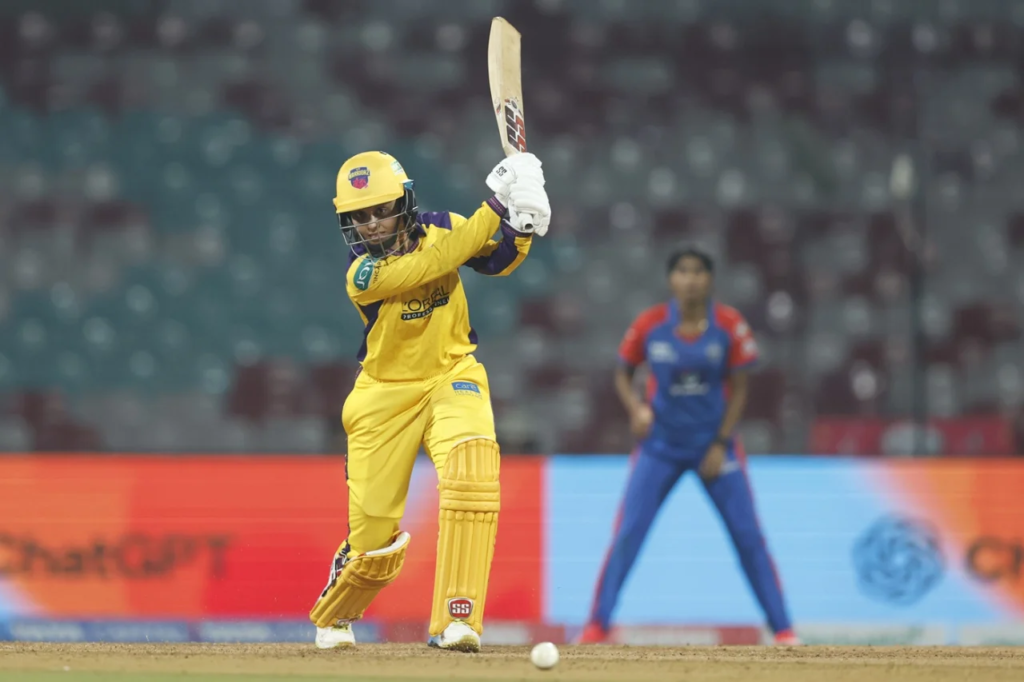
But then, Warriorz coach Abhishek Nayar gestured from the dugout. It was clear that he wanted one of the batters to return. Logic would dictate Sehrawat’s return because neither had she exploded, and she was also the new batter. But when Nayar pointed at Deol to return, it was an absolute shocker.
Not just for the fact that Harleen was set, but also because UP didn’t really have a big hitter coming in anyway. Chloe Tryon, who was next, had a balls-per-boundary ratio of 6.51, only marginally better than Deol’s 6.68 since 2023, and was out in just 3 deliveries.
It ended up being a complete momentum shift towards the Delhi Capitals, and eventually might have cost UP the game, as UP got just 10 runs off their last 3 overs. Disastrous by every single standard.
Data from Women’s T20 Batting App using Himanish Ganjoo’s T20 cricket BBB database up until October 2025, Arnav Jain’s fielding toolkit, Cricmetric, Cricket By JB’s WPL analyses & the Broadcast.
Want to learn more about WPL stars, their numbers and what they’re good at? Try out our WPL Quiz game 🔽
Inspired by writers on Substack and the Best Cricket Stories.