
Delhi Capitals finally close out a run chase and keep their hopes alive as we move deeper into the tournament. Two innings of great class today, read our analyses here.
📝 Sciver-Brunt’s low-scoring masterclass
The Vadodara pitch on offer today was significantly slower and lower than most surfaces we’ve seen this tournament. Run-making was tougher, the ground felt bigger, and strike rotation became all the more critical.
Mumbai Indians found this out in their powerplay, scoring just 23 for the loss of 2 wickets. In fact, after the second over when MI were 14 for 0, it took them until the 12th over to get their run rate back over 6—and that too thanks to the steady partnership between veterans Harmanpreet Kaur and Nat Sciver-Brunt.
This pitch had interesting aspects. For starters, the bounce was significantly lower than Navi Mumbai—about 9 centimetres lower on average. Considering this was only the second game at this venue, batters would obviously take time to adjust or succumb due to a lack of adaptability.
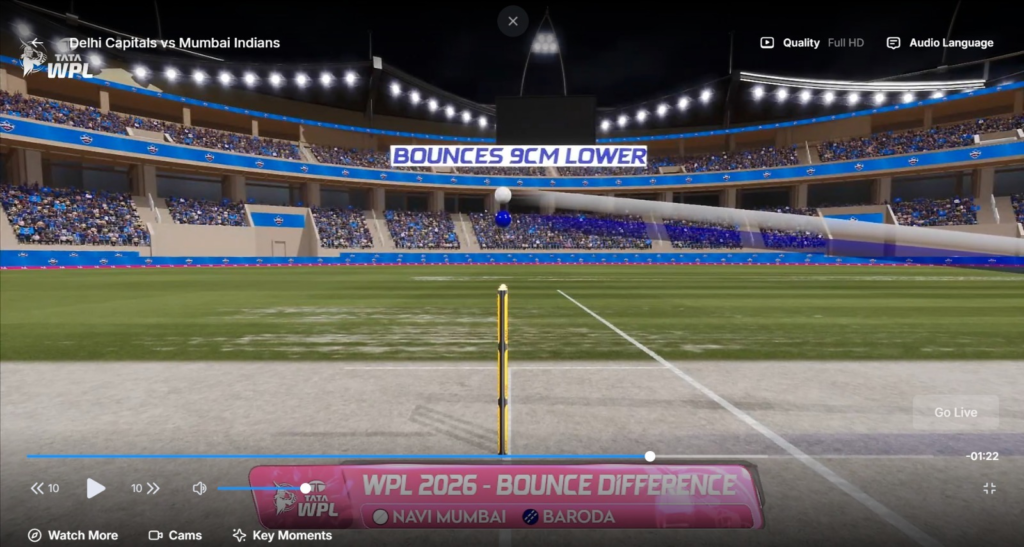
We saw this in the dismissals of Hayley Matthews and Sajeevan Sajana, both bowled by deliveries that nipped in and stayed low. From there, it was imperative that the new batters not only assessed conditions and played accordingly but also possibly revised their hitting areas and took their time to settle in.
Yet again, it was the familiar duo of Kaur and Sciver-Brunt who found themselves in the middle for MI. It was a slow but steady start, with both batters gradually getting into their work.
Unfortunately, MI lost Kaur for 41 just when she was starting to pick up pace. But her partner was setting up for another classic.
When MI lost Harmanpreet, Sciver-Brunt was taking her time but had started accelerating, batting on 36 off 26. It was a masterclass in absorbing pressure and rotating strike—at that point, Sciver-Brunt had scored just 18 runs from boundaries. The rest came from running between the wickets. Her non-boundary strike rate? A whopping 81.8, as she picked up 18 runs off 22 deliveries.
To put that in context, elite batters have an NBSR of around 70 to 75. Sciver-Brunt was even better than that benchmark. She’d faced just 7 dot balls, with 6 of them coming in the first 7 deliveries of her innings.

What was so impressive, apart from just the strike rotation, was the clarity of thought Sciver-Brunt showed, dabbing the ball into her favourite pockets around long-on and mid-wicket and running ones and twos. On a pitch where the ball was staying low, Sciver-Brunt also applied the sweep shot to great effect, countering spin and the lower arm-release variation from Shree Charani perfectly.
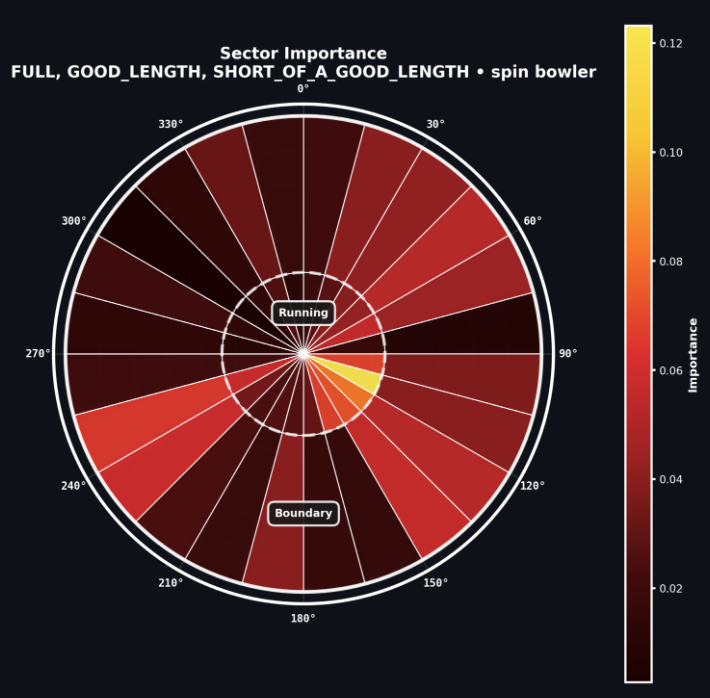
Along with her sweeps, one of the biggest reasons Sciver-Brunt got runs was her ability to use her feet—both by going right back in her crease and by coming down the track. Her impact points against spin highlight exactly that.

Overall, some would say she missed out on accelerating a bit more toward the end. But at the same time, Sciver-Brunt provided a masterclass in batting clarity, footwork, and how to pace an innings. She ended with 65* off 45—an innings laced with 6 fours, 2 sixes, and an NBSR of 78.3. Elite numbers on a low, turning pitch where every other MI batter struggled.
🤘 Jemi and DC come good after *nearly* choking it again
With the Delhi Capitals, it never really is over till it is, in fact, over. Many thought that Mumbai were a few runs short, and it also looked that way when the Capitals started batting. Getting off to a flying start in the powerplay with 57 for 0, it looked as though the game would wrap up in 16 overs or something of the sort.
But Mumbai’s bowlers came back beautifully and also exploited conditions to make inroads into the Capitals’ batting order, pulling the score back to 118 for 3 in 16.1 overs, when they lost Laura Wolvaardt to a run-out at the non-strikers’ end.
What the Capitals desperately needed was to finish the chase off and their captain, Jemimah Rodrigues, to see it through, not just for them to stay alive in the tournament but also for her own batting and captaincy confidence, given the start they’ve had.

Jemi responded with an innings as good as Sciver-Brunt’s. She utilised the longer boundary to great effect, rotating strike and running a lot of 2s. She eventually played an innings suited exactly to the conditions, scoring 49% of her runs through running between the wickets at a really impressive non-boundary strike rate of 80.6, elite in any context and bettering Sciver-Brunt’s effort earlier in the day. Remaining not out for the winning runs was the cherry on top.
Eventually, the Capitals might have still taken it a bit too close for comfort, but the boundaries in the penultimate over ensured that they sealed the deal. Watch out for them now because a well-fought win such as this goes a long way in a tournament!
Data from Women’s T20 Batting App using Himanish Ganjoo’s T20 cricket BBB database up until October 2025, Arnav Jain’s fielding toolkit, Cricmetric, Cricket By JB’s WPL analyses & the Broadcast.
Want to learn more about WPL stars, their numbers and what they’re good at? Try out our WPL Quiz game 🔽
Inspired by writers on Substack and the Best Cricket Stories.